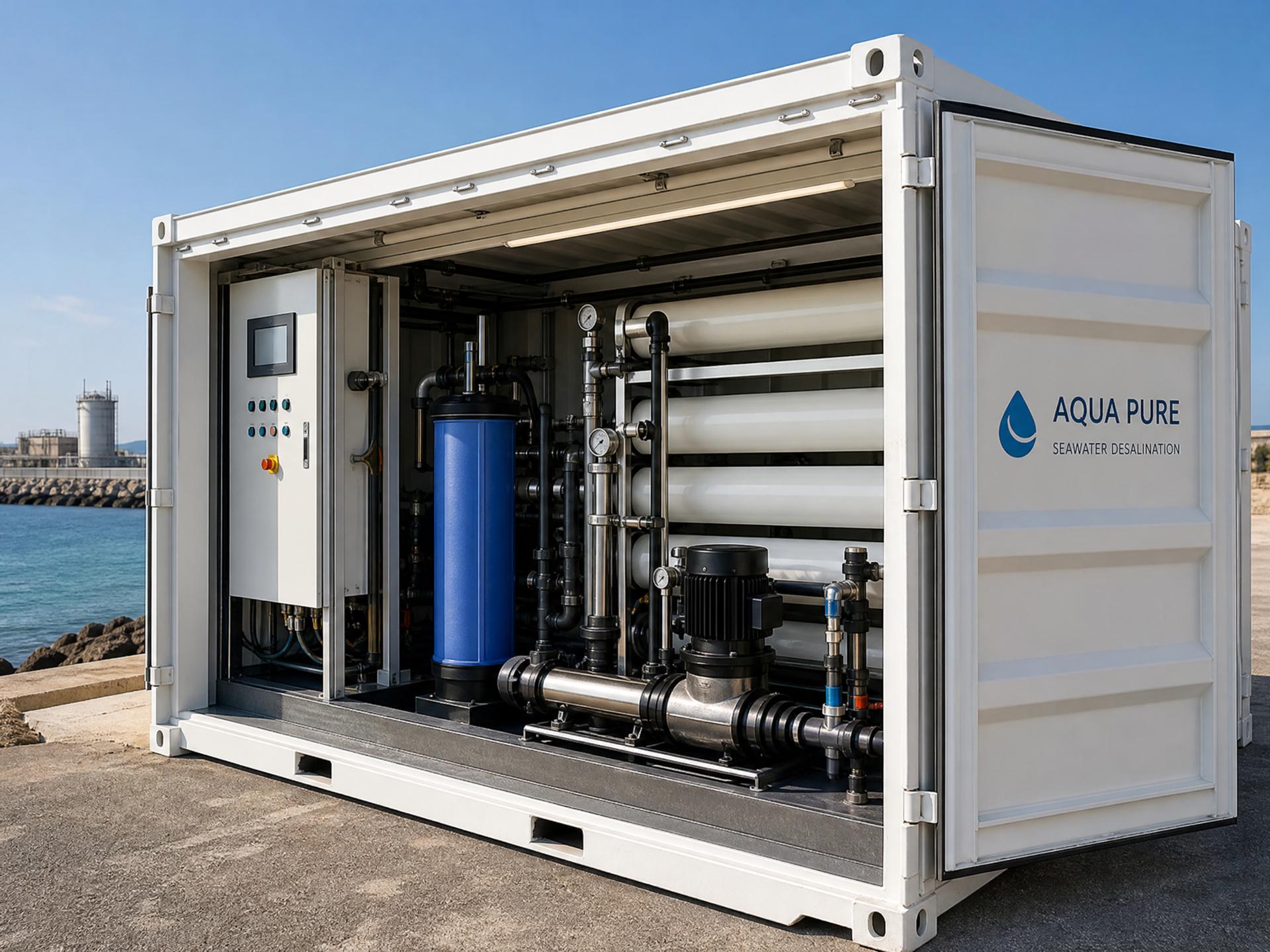
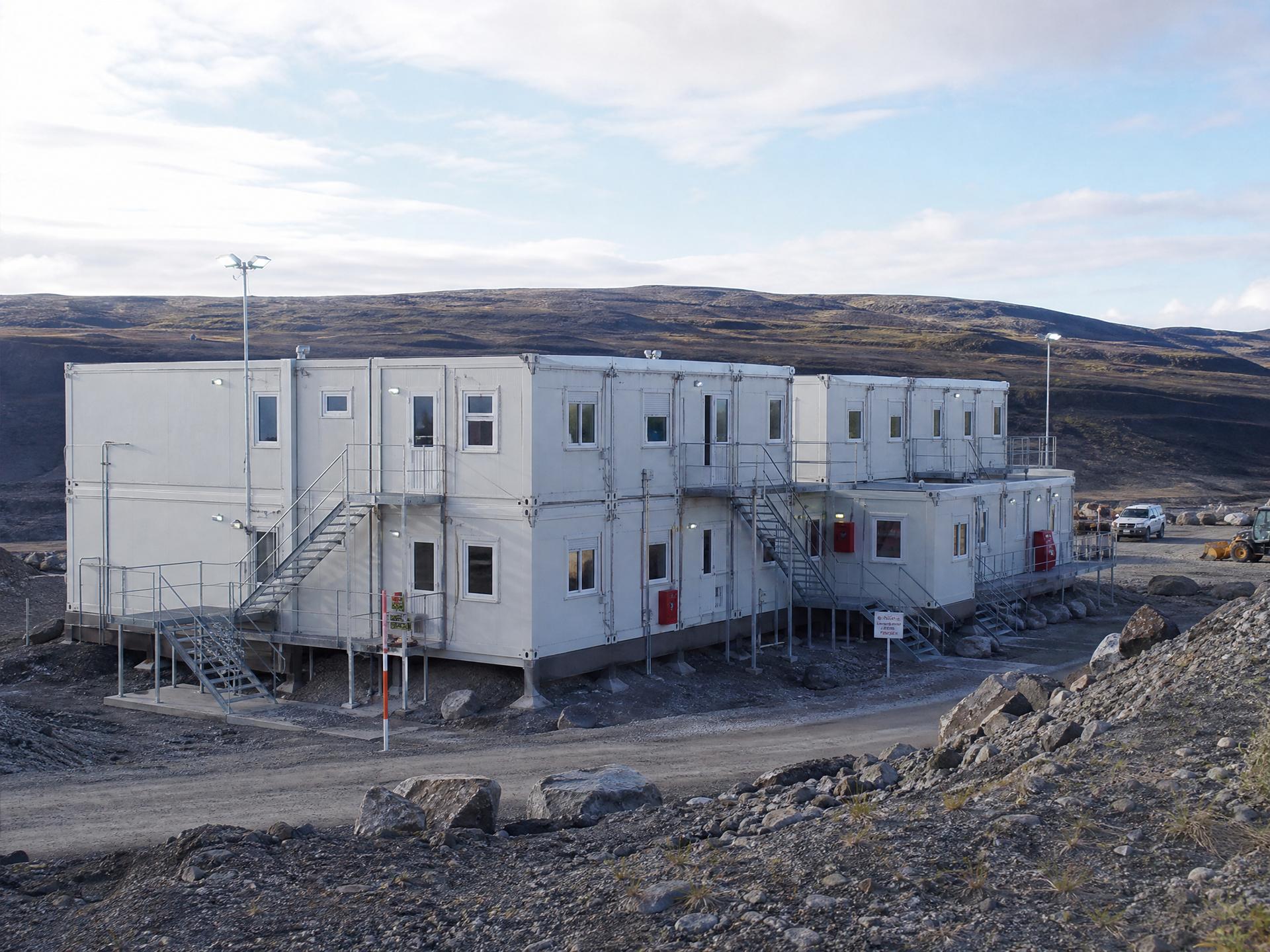
Containerized seawater desalination systems based on reverse osmosis (RO) technology provide a flexible, rapidly deployable solution for freshwater production in coastal and island locations. Unlike conventional civil-construction desalination plants, containerized systems can be operational within weeks of delivery and relocated as project needs change.
Technology Overview: Reverse Osmosis
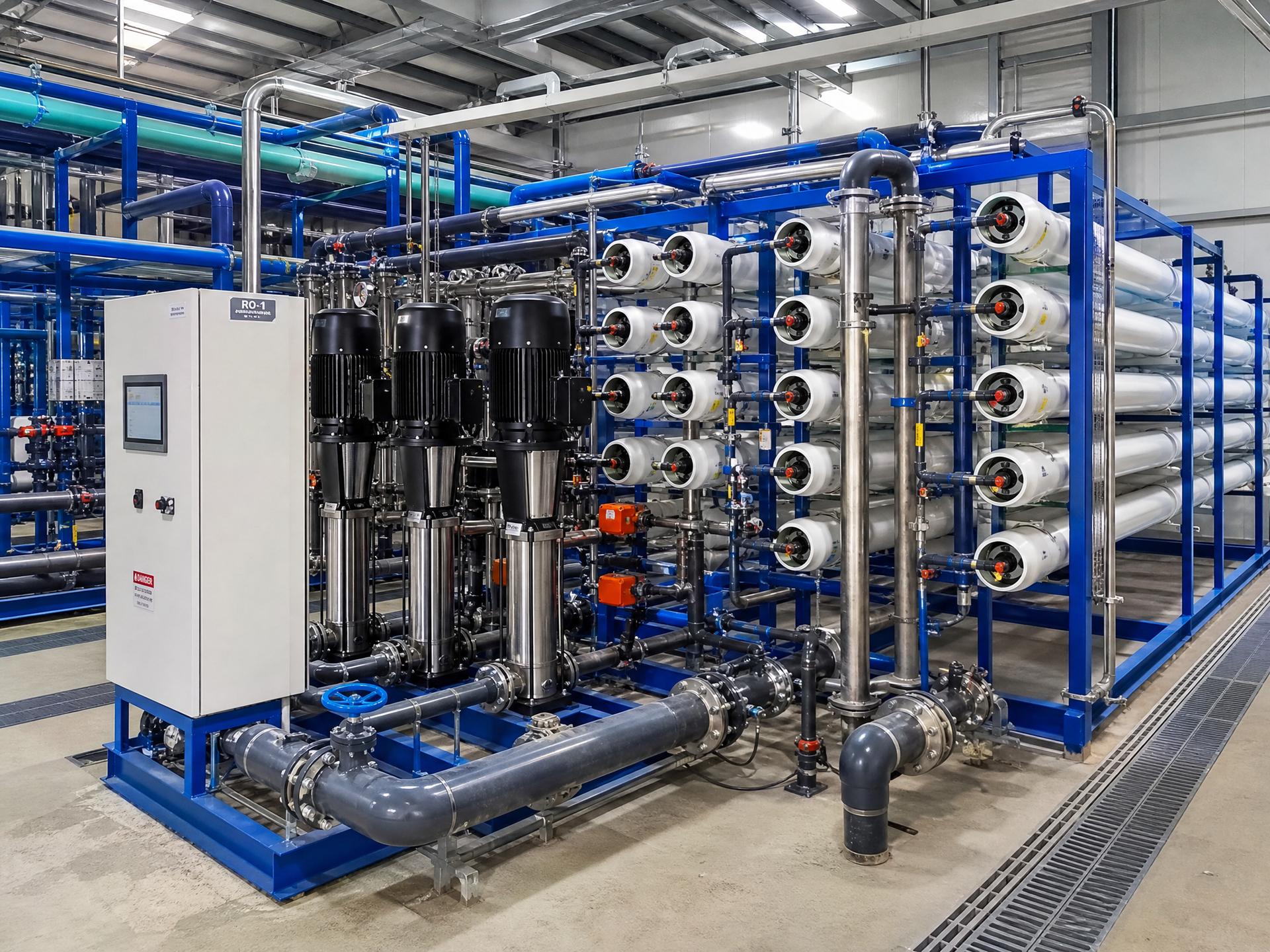
Reverse osmosis forces seawater through semi-permeable membranes at high pressure (55–70 bar), rejecting 99.5%+ of dissolved salts, bacteria, and viruses. Modern RO systems achieve energy consumption of 3.0–4.5 kWh per cubic meter of product water — a 60% improvement over systems from 20 years ago, largely due to energy recovery devices (ERDs).
Standard Capacity Range
- 50 m³/day — Single 20ft container, suitable for small communities or construction camps (200–300 people)
- 100 m³/day — Single 40ft container, suitable for medium communities (400–600 people)
- 250 m³/day — Two-container system, suitable for small industrial operations
- 500 m³/day — Three-container system, suitable for mining camps or island resorts
- 1,000 m³/day — Multi-container system, suitable for small municipalities
- Custom sizes up to 10,000 m³/day — Modular expansion possible
Key Technical Specifications
SMT's standard containerized RO systems include:
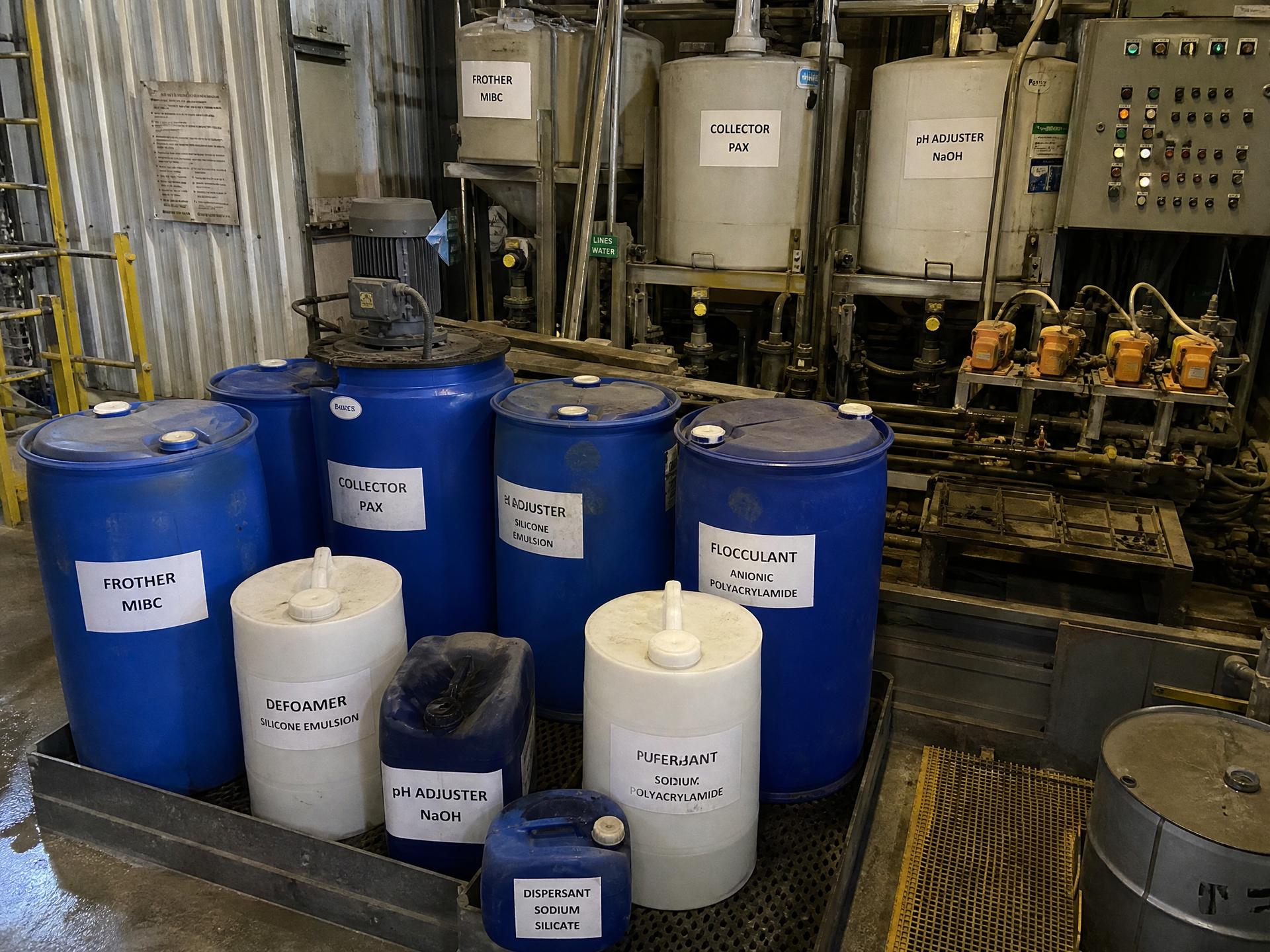
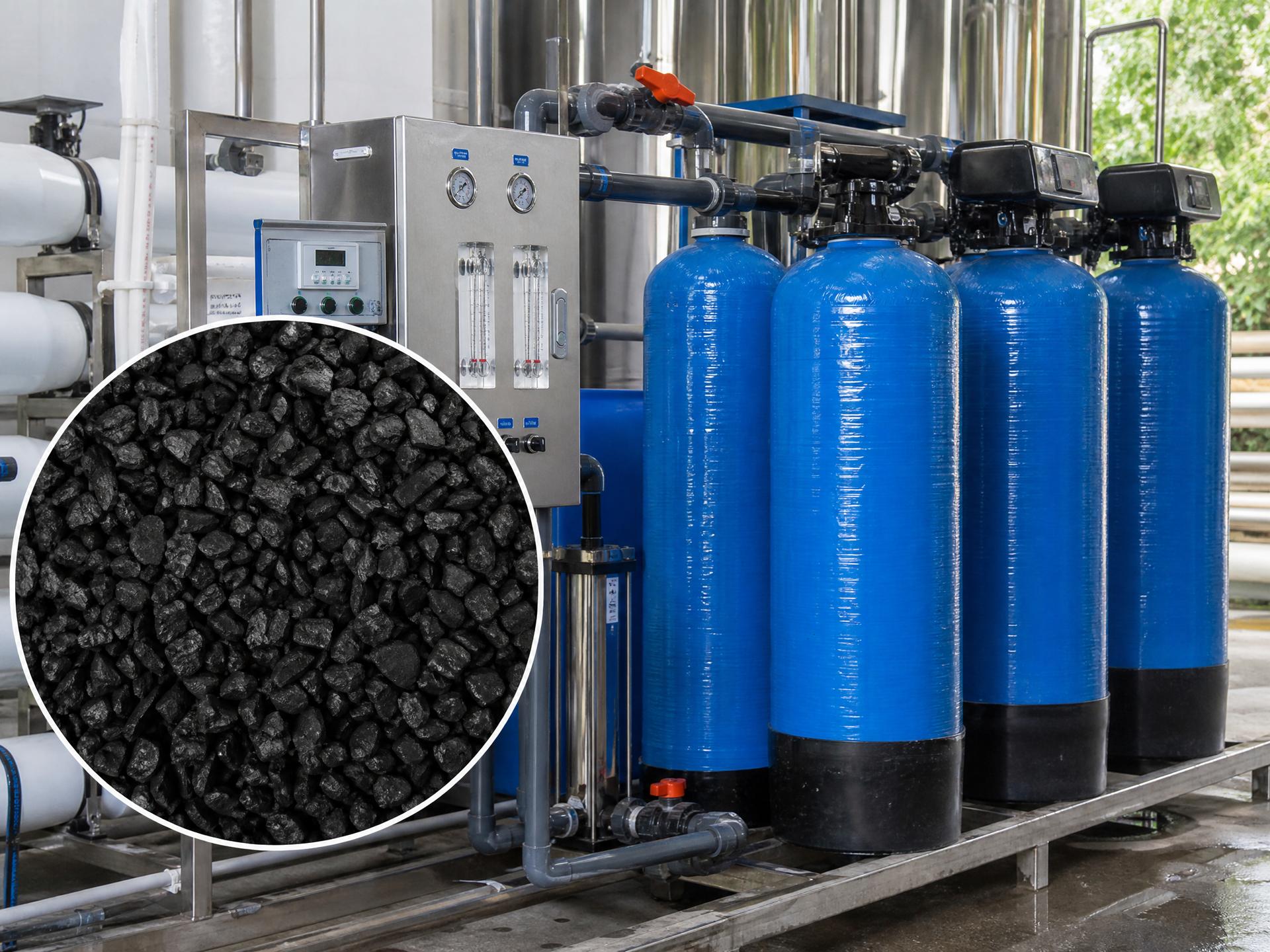
- Pre-treatment: Multi-media filtration, cartridge filtration (5 micron), chemical dosing (antiscalant, biocide)
- RO Membranes: Dow Filmtec, Toray, or equivalent 8-inch elements
- High-Pressure Pumps: Grundfos or Danfoss, stainless steel 316L construction
- Energy Recovery: Pressure exchanger (iSave or ERI PX) for systems >250 m³/day
- Post-treatment: Remineralization, UV disinfection, chlorination
- Control System: PLC with remote monitoring capability (4G/satellite)
- Power Supply: 380V/50Hz or 440V/60Hz, compatible with diesel generator or grid
Deployment Considerations
Successful deployment of containerized desalination systems requires careful site assessment:
- Seawater quality: TDS, temperature, SDI, and biological content affect system design
- Intake design: Beach well intake preferred for biological control; open intake requires additional pre-treatment
- Brine disposal: Concentrate must be returned to sea at sufficient distance and depth
- Power availability: System power demand ranges from 3–8 kW per m³/day capacity
- Civil works: Concrete pad, perimeter fencing, and chemical storage shed required
SMT Supply Package
SMT provides complete containerized desalination systems from design to commissioning. Our standard package includes: system design based on your water quality analysis, factory acceptance testing (FAT) before shipment, installation supervision, operator training, and 12-month performance warranty.
Ready to Source? Contact SMT Today
Our engineering team is available to discuss your specific requirements and provide a detailed technical and commercial proposal within 24 hours.
Send Us Your Inquiry →